PPC Agency, Freelancer or In-House? A UK Cost Guide
PPC company, freelance PPC consultant or an in-house hire? Compare true UK costs, cover and skills, with a decision tree and an ownership checklist.
Med spa advertising on Google and Meta: what policy allows for Botox, filler and GLP-1 ads, how to structure campaigns and how to track booked consults.
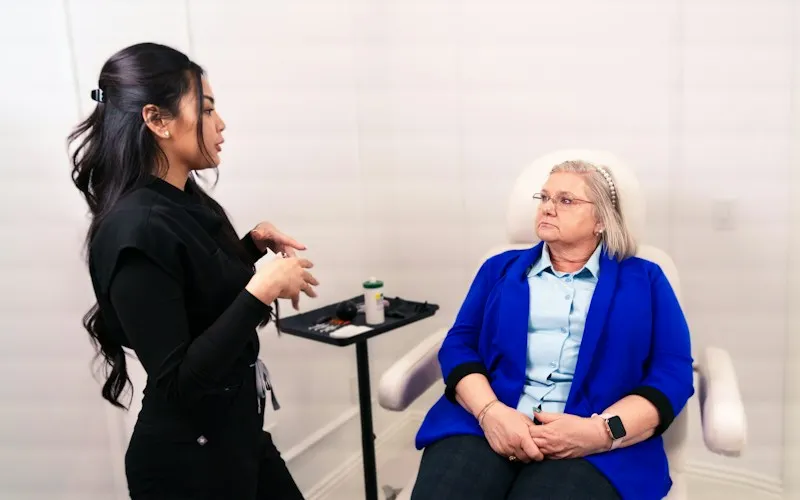
This post covers how a US med spa or aesthetics clinic can advertise Botox, fillers, laser, body contouring and weight-loss injections on Google and Meta without disapprovals, and how to turn clicks into booked consultations. Phone leads matter here too, so read it alongside call tracking for lead generation. Nothing below is legal advice: have a healthcare attorney review your ads and your tracking.
Google keeps a list of prescription drug terms that its healthcare policy restricts. It includes “botox”, “botulinum toxin”, “dysport”, “xeomin”, “semaglutide”, “ozempic”, “wegovy”, “tirzepatide”, “latisse” and “tretinoin” (Google Ads policy). Brand and generic names both count.
Dermal fillers, laser treatments, chemical peels and microneedling are not on that list, but other rules on both platforms still reach them. Sort your menu into three buckets before you write a single ad:
In the US, yes in ad text, and only with certification as a keyword. For campaigns targeting the United States, Canada or New Zealand, Google says you may use prescription drug terms in ads and landing pages without certification, but “you must be certified in order to keyword-target these terms” (Google Ads policy). Outside those three countries, you can’t use the terms in ads or landing pages at all.
Google’s examples of certification types are online pharmacy, telemedicine, addiction services, health insurance and pharmaceutical manufacturer, and some need LegitScript, NABP or G2 accreditation first (Google Ads policy). A clinic that only injects in person matches none of those examples. Plan the keyword list without “botox” terms and ask Google support before you apply.
In practice:
GLP-1 weight loss is stricter. If you prescribe online or through telehealth, Google requires LegitScript Healthcare Merchant Certification plus Google’s own certification in the US (Google Ads policy). Google also says it “errs on the side of caution” with landing pages that appear to facilitate online prescribing (Google Ads policy). If your weight-loss page offers an online intake that leads to a prescription, treat it as a telehealth funnel and certify it, or move the offer to an in-clinic consultation.
Google’s personalized advertising policy treats health as a sensitive interest category. Its health page names “invasive medical procedures, including cosmetic surgery, surgical procedures, or injections” as restricted (Google Ads policy). For those ads, you can’t use advertiser-curated audiences: Customer Match, your data segments (remarketing), lookalike segments and audience expansion (Google Ads policy). Google’s in-market, affinity, demographic and location targeting stay available.
A list of everyone who viewed your filler page can’t power a filler ad. Two things follow:
Meta’s health and wellness policy sets three rules (Meta Advertising Standards):
Meta’s personal attributes policy bans copy that asserts or implies the viewer’s health, age or medical condition (Meta Advertising Standards). Meta’s own examples: “Our new lotion and creams fight wrinkles like never before!” passes, and “Ready to upgrade your skin to look younger?” fails.
Prescription drugs sit under a separate policy. To promote them, online pharmacies and telehealth providers need active LegitScript certification and Meta authorization, may target only the US, Canada or New Zealand, and only people 18+. General telehealth ads don’t need written authorization (Meta Advertising Standards). Meta’s health policy points prescription weight-loss products to the same rules.
Lead with the treatment, the result and the consultation. Leave the viewer’s face out of it.
| Fails | Passes |
|---|---|
| “Tired of your forehead lines?” | “Soften forehead lines in a 20-minute visit” |
| “Do you hate your double chin?” | “Non-surgical chin contouring. Free consult.” |
| “Lose 30 lbs in 30 days” | “Physician-supervised weight loss. Book a consult.” |
The visit length and offer in the right column are placeholders. Use claims that hold true for your clinic.
For creative on Meta, show the provider, the room and the consultation. For before-and-after images in 18+ ad sets, get written patient consent and keep lighting and angle identical between shots.
Build one Google Search campaign per treatment line: neurotoxin, filler, laser, body contouring, weight loss. Each one gets its own budget, landing page and conversion value. Say a click on “lip filler” and a click on “laser hair removal package” both cost $15. They lead to very different revenue per booking, and a shared campaign hides that.
On Meta, start with one campaign per offer, two or three ad sets at most, and set every ad set to 18+. Name the treatment in the ad, not the audience.
Running both platforms on one plan is what our Google Ads management and Meta Ads management cover.
Send paid traffic to a page that books a time slot. A “contact us” form adds a callback step, and every step between the ad and the calendar loses people.
A refundable or credited consult deposit filters out people who won’t show up. Say you charge a $50 deposit credited toward treatment. You’ll get fewer bookings than a free form, and more of them will arrive. Test it on one treatment first and compare booked-and-attended consultations, not raw leads.
Keep intake light on the booking page. Ask for name, contact and treatment of interest, and save medical history for the clinic visit. That also keeps sensitive detail out of your ad tags.
Bid on the event closest to revenue that you can count with confidence: a booked consultation, then an attended one.
Meta also prohibits sending health information through its Business Tools, including medical procedures, treatments, and prescription medication, in URL parameters, custom event names, custom conversions and custom audiences (Meta Business Help Center). An event called botox_consult_booked or a URL like /book?treatment=semaglutide breaks that rule. Use neutral names such as consult_booked. Setting this up server-side follows our Meta Conversions API setup guide.
They can, if your practice is a HIPAA covered entity. HIPAA covers health care providers only if they transmit health information electronically in a transaction HHS has a standard for, such as insurance billing (HHS). Whether your clinic qualifies depends on how it bills, so ask counsel which side you’re on.
If you are covered, the HHS Office for Civil Rights bulletin on online tracking technologies applies. It says tracking on logged-in pages such as patient portals generally has access to protected health information, and that a tracking vendor receiving appointment details from a clinic’s booking page is a business associate that needs a business associate agreement (HHS).
On June 20, 2024, a federal court in Texas vacated part of that guidance: the part saying HIPAA applies when a tracker links an IP address to a visit on a public page about health conditions or providers. HHS’s page says it is evaluating next steps (HHS). The court left the rest of the bulletin in place, including the sections on logged-in pages and booking tools.
In practice: keep ad pixels off patient portals and intake forms, send booking events server-side with only the fields you need, and get the setup reviewed. Our tracking setup work follows those rules.
Our lead generation work for clinics starts with this tracking layer, then the campaigns. For an outside view of your account, start with our free Profit Growth Plan.
In the US you can name Botox in ad text and on landing pages without certification. Bidding on “botox” keywords requires Google certification (Google Ads policy). Target treatment and outcome terms instead.
Yes for cosmetic procedures, if the ad targets people 18 or older. Weight-loss ads can’t show close-ups of someone pinching fat (Meta Advertising Standards).
Not on Google. Its personalized advertising policy blocks remarketing and Customer Match for injections and other invasive procedures (Google Ads policy).
Only for some activities. Google and Meta require it for telehealth providers and online pharmacies that promote prescription drugs, such as online GLP-1 programs (Google Ads policy, Meta Advertising Standards).
Related articles
PPC company, freelance PPC consultant or an in-house hire? Compare true UK costs, cover and skills, with a decision tree and an ownership checklist.
How to scale your business with AI marketing in Google Ads and Meta Ads: what to automate first, what data AI needs, and which controls to keep.
Five ad spend mistakes in Google Ads and Meta Ads: weak conversion tracking, tired creative, loose targeting, the wrong bid strategy and no testing.
We use cookies for analytics and advertising. You can opt out of the sale or sharing of your data at any time.Cookie Policy
Your browser's Global Privacy Control signal is on, so we don't share your data for advertising.